

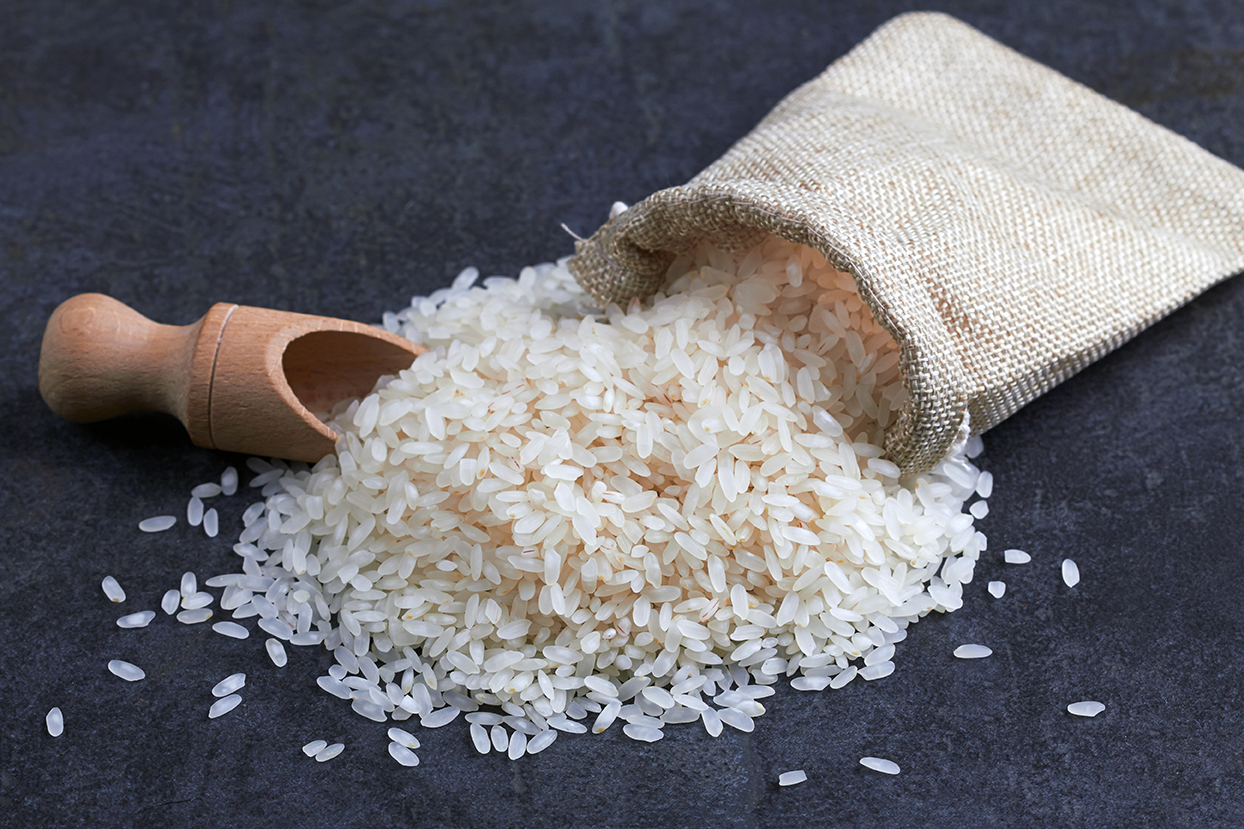
Thai rice exports in the first 11 months reached 7.29 million tons. The full-year target is expected to exceed 7.88 million tons, with a possibility of reaching 8 million tons. However, the target for 2026 is only 7 million tons due to high competition, India releasing its stock, slowing imports from trading partners, and the strong baht making Thai rice more expensive and reducing its competitiveness. Meanwhile, cassava exports have already exceeded the target at 7.83 million tons, and strong sales are expected to continue in 2026.
Ms. Arada Fuengthong, Director-General of the Department of International Trade, Ministry of Commerce, revealed that Thai rice exports during the first 11 months of 2025 (January-November) totaled 7.29 million tons, a decrease of 21%, with a value of US$4,162 million, a decrease of 30%, or approximately 136,823 million baht. She expects total exports for the year to reach approximately 7.88 million tons, exceeding the target of 7.5 million tons, and potentially reaching 8 million tons if deliveries proceed quickly. For 2026, discussions with the private sector have estimated exports at around 7 million tons, due to significant challenges remaining.
By 2026, the global rice market is expected to remain highly competitive due to increased rice production, India’s large rice stockpiling, a projected decrease in demand for rice imports from key trading partners such as Indonesia, geopolitical conflicts affecting transportation costs, and the appreciation of the Thai baht, which reduces the competitiveness of Thai rice prices. These effects have been present since the beginning of 2025 and are expected to continue into 2026 if relevant agencies do not intervene to maintain the baht at an appropriate level.
The department plans to boost Thai rice exports, including promoting government-to-government (G2G) rice trade with China, which has been agreed upon for 500,000 tons. Currently, an agreement has been reached for 100,000 tons, with price negotiations underway. It is expected that a decision will be made after the New Year, with deliveries beginning in March 2026. The remaining amount will be negotiated for the rest of 2026, with further details to be discussed. As for the 100,000-ton deal with Singapore, preparations have begun, and discussions will commence in January 2026.
At the same time, efforts will be accelerated to expand the market for white rice and parboiled rice in promising markets such as Iraq, Saudi Arabia, the Middle East, and Africa. The market for refined rice will also be expanded to countries such as Germany, Switzerland, and the United States. Furthermore, efforts will be strengthened to build relationships and trust with key trading partners such as Hong Kong, China, the United States, and Canada. Thai rice will be promoted through international trade fairs, connecting rice importers and exporters, and promoting Thai rice through online channels. Campaigns promoting Thai rice consumption will also be conducted in collaboration with restaurants and renowned key influencers.
Ms. Arada stated that cassava exports during the first 11 months totaled 7.83 million tons, an increase of 28.36%, exceeding the target of 7.5 million tons. This was a result of proactive activities to expand into new, potential countries and regions, while maintaining existing key markets. These activities included organizing trade delegations to sell cassava in China, Saudi Arabia, Japan, and the United Arab Emirates, and hosting the 2025 World Cassava Conference. For 2026, exports are expected to surpass those of 2025, with plans to continue expanding export markets to southern China, Japan, North America, and Europe, among others, to drive the cassava into the animal feed, food, chemical, adhesive, and paper industries.
https://www.thairath.co.th/news/governmentpolicy/2904360