
When discussing the “big brother” of ASEAN, one cannot ignore the People’s Republic of China, the world’s second-largest economy and a major global hub for production, trade, and investment. This makes it a significant player in the economies of Thailand and ASEAN. With over 1.4 billion people, it is a massive consumer market and the world’s largest exporter and importer of numerous product categories. The Chinese government drives its economy with a “High-Quality Development” policy, focusing on innovation, technology, and the green economy.
Given the long-standing and strong relationship between Thailand and China, with China being Thailand’s number one trading partner, popular Thai products in China include durian, mangosteen, longan, rubber, cassava, jasmine rice, processed foods, beverages, and health products.
Thai PBS Online conducted an exclusive interview with Ms. Chaninthon Hrimcharoen, Deputy Director-General of the Department of International Trade, regarding the trade situation between Thailand and China. She stated that Thailand and China enjoy strong trade relations, with China being a major export market and a source of imports, raw materials, and investment for Thailand. Meanwhile, Thailand serves as a key production base and logistics hub for China in ASEAN. Cooperation under RCEP, ACFTA, and infrastructure connectivity projects will continue to drive long-term growth in trade and investment between the two countries, despite the challenges posed by trade competition and changes in the global economy.
In the first five months of 2026, Thai agricultural exports to China totaled 380,559.80 million baht, with China being the number one market. The value of Thai agricultural exports to China amounted to approximately 161,464.84 million baht, accounting for 42% of the total Thai agricultural export market. The top-selling products were fresh, chilled, frozen, and dried fruits, followed by rubber and cassava.
The value of fruit exports this year increased by 28.95% compared to the same period last year, reaching 87,568.63 million baht. China is Thailand’s number one source of imports, with the majority of goods imported from China being machinery, electrical machinery and components, chemicals, computers, and household electrical appliances.
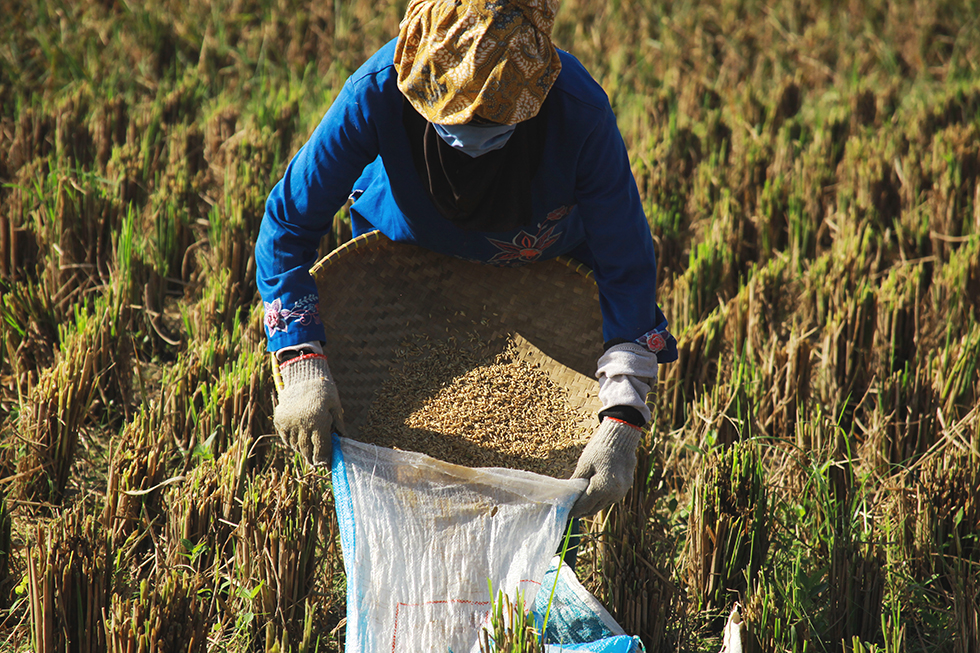
Thai rice has always been a favorite among Chinese consumers.
The Deputy Director-General further stated that, regarding rice products, Thailand has exported approximately 440,000 – 750,000 tons of rice to China annually, valued at approximately 10,000 – 13,600 million baht, or about 300 – 400 million US dollars. This accounts for approximately 7 – 12% of China’s total rice imports. For the first five months of 2016 (January – May), Thailand exported approximately 139,460 tons of rice to China, a decrease of 44.84% compared to the same period of the previous year, which exported approximately 252,817 tons. The majority of exports were white rice, followed by glutinous rice, Thai jasmine rice, and the remainder being Thai fragrant rice and brown rice.
“Thai sticky rice”: A golden opportunity to penetrate the Chinese restaurant market.
Furthermore, Thai glutinous rice is considered another important type of rice in Thailand. By 2025, Thailand will be the second largest exporter of glutinous rice to China, after white rice, while Thai jasmine rice will be third. Inquiries with Chinese rice importers indicate that Thai glutinous rice is popular and well-regarded in China for its taste and quality. Chinese consumers widely use it in dishes such as zongzi (rice dumplings), tangyuan (rice balls in sweet soup), and other foods. It is particularly consumed in large quantities during Chinese festivals and traditions. It is also used in the food industry and other sectors, such as in the production of liquor and paint.
Therefore, the Department focuses on promoting the positive image and unique qualities of Thai rice, including its taste, quality, standards, and variety, which can meet the needs of all types and groups of rice consumers in China. In particular, it targets young and middle-aged consumers with high purchasing power, employing live streaming as a key strategy – the most influential communication channel in China currently – to stimulate purchases of Thai rice and rice products among the target audience.
80% of Thai rice exported to China is distributed to southern China, going on to wholesalers and retailers at the city and district levels. The mid-to-high-end market segment, particularly restaurants, hotels, department stores, supermarkets, and modern retail outlets, are the most commonly found Thai rice in these retail markets. The types of Thai rice most frequently seen are Thai jasmine rice and glutinous rice.
Expedite the closing of the “G2G rice” deal this year.
Regarding the progress of G2G rice sales with China, the Department of International Trade Promotion (DITP) and COFCO Corporation (COFCO) have successfully negotiated and agreed on the price for the ninth installment of 40,000 tons of 5% white rice from the new harvest, which has already been delivered to COFCO. For the tenth installment of 60,000 tons, the DITP submitted a price proposal for delivery to COFCO on June 24th. This proposal is currently under COFCO’s consideration. The DITP hopes to receive continued support in negotiating and successfully completing the G2G rice sale as soon as possibl
Changing consumer behavior and China’s development of new rice varieties raise concerns about the future of Thai rice.
Regarding the major challenges and obstacles between Thailand and China, it must be acknowledged that China is a major rice producer and exporter, producing approximately 180-185 million tons of rice annually. Of this, about 145-148 million tons are consumed domestically, leaving approximately 1-2 million tons for export.
Of particular concern is the changing consumption patterns in China. Historically, China consumed approximately 154 million tons of rice per year. Currently, the demand for rice in China is around 145 million tons per year. This is because consumers, especially younger generations, are reducing their rice consumption, and some are switching to other grains or consuming rice mixed with grains. As a result, the demand for rice, including Thai rice, has decreased.
In the current rice breeding program in China, the government is developing rice varieties with improved quality, taste, and diversity to meet the demands of domestic consumers. Furthermore, they are developing varieties with higher yields per acre, resulting in more affordable prices for consumers.
This includes China’s rice import management system. China imports rice under a quota system, specifying only eligible groups that are entitled to quotas. Furthermore, all rice exporters to China must be registered as rice exporters, producers, and processors
with the General Administration of Customs China (GACC) before exporting rice to China. Currently, there are 115 Thai rice exporters registered with this agency.
Although Thai rice is well-regarded in China for both its taste and quality, and is considered a premium product by Chinese consumers, often given as gifts during Chinese festivals, its price remains high
compared to competitors such as Vietnam, Pakistan, and India, or even Chinese rice. This lack of a price competitive advantage for Thai rice results in a disadvantage.
Because price is a key factor in consumer purchasing decisions, Thai rice has lost market share in China. However, the Department has continuously promoted Thai rice in China, highlighting the diversity of Thai rice varieties that can meet the needs of all consumer groups.
Moving forward with more activities to increase opportunities for Thai rice.
The Deputy Director-General added that, in order to build awareness and a positive image for Thai rice, the Department is promoting Thai entrepreneurs, especially small and medium-sized enterprises (SMEs), in order to increase opportunities and market channels for Thai rice among international buyers, importers, and distributors.
Furthermore, the Department, in collaboration with the Office of Small and Medium Enterprises Promotion (OSMEP), organized this Thai Rice Roadshow, held from July 17-19, 2026, in Guangzhou, People’s Republic of China. The event brought together 28 Thai rice and rice product entrepreneurs to showcase their goods, promote and publicize Thai rice, and stimulate demand in China.
In the past, the department has led Thai rice exporters to strengthen trade relations with government and private sector entities involved in rice in key purchasing countries such as Hong Kong, Japan, and South Korea. In August, a delegation of Thai rice exporters is scheduled to visit the Philippines and Malaysia, Thailand’s third and fourth largest export markets, to build stronger business partnerships, which will help maintain and expand the market for Thai rice.
Thailand is confident it will export 7 million tons of rice this year as planned.
The Deputy Director-General stated that the target for Thai rice exports this year remains at 7 million tons. In the first six months, Thailand has already exported 3.5 million tons, so it is believed that the target for the entire year will be met. Regarding rice exports to the Chinese market, in the first five months of 2026, Thailand exported approximately 139,000 tons of rice to China, a decrease of 45% compared to the same period last year when exports totaled approximately 252,000 tons.
Because China’s rice production increased by approximately 1% this year, while its rice consumption demand decreased by about 2%, coupled with China importing over 3 million tons of rice from abroad in 2025—higher than the 2.6 million tons and 1.6 million tons imported in 2023 and 2024 respectively—there will still be sufficient rice stocks to meet demand for a while.
However, China continues to import rice to meet its consumption needs, especially in urban areas and the service sector. Imports of Thai glutinous rice and organic rice, in particular, are showing significant growth. At the same time, Thai food continues to grow in popularity among Chinese consumers, as evidenced by the increasing number of Thai restaurants in China, spread across many regions.
Thai rice benefits from its strengths in quality, standards, safety, and consistency, especially Thai jasmine rice, which firmly holds its position as a premium product in China. Therefore, even if the quantitative growth trend may not be outstanding, China remains a key market with significant potential for Thai rice exports in the long term.
ขอบคุณเนื้อหา : https://www.thaipbs.or.th/news/content/508617